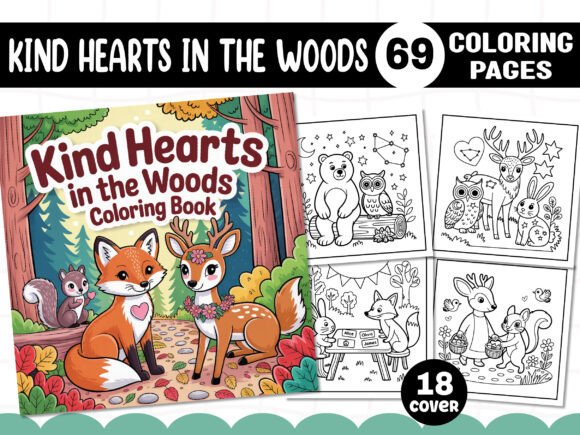
Kind Hearts in the Woods: An Embroidery Designer’s Review
When I get a new embroidery design file, my first question is never just about aesthetics. It’s about potential. How will this translate into thread on fabric? What kind of real-world project does it whisper to me? Today, I’m looking at Kind Hearts in the Woods Coloring Pages, considering it not as a digital graphic, but as the blueprint for a handmade product.
The Immediate Mood: Gentle, Welcoming, and Versatile
The first impression is one of gentle charm. The theme of hearts integrated with a woodsy, natural element creates a mood that’s both warm and slightly whimsical. It feels welcoming. This isn’t a bold, aggressive statement piece; it’s a soft, personal accent. The layout and shapes suggest a design that would excel as a subtle, meaningful addition to an item, rather than being the loud centerpiece. For an embroidery designer, this is key. It tells me this embroidery design is likely suited for projects where the story is emotional—a personalized gift, nursery decor, or boutique product meant to evoke comfort.
Where It Shines: Real-Life Embroidery Project Ideas
Let’s picture a real scenario. I’m preparing a custom embroidered tote bag for a small shop’s spring collection. The shop owner wants something that feels handmade and heartfelt. Kind Hearts in the Woods Coloring Pages comes to mind immediately. Its nature-inspired, kind-hearted theme aligns perfectly with a brand built on authenticity. Stitched onto a natural canvas tote, perhaps using a mix of satin stitch for the hearts and a lighter fill stitch for the woodsy elements, it would create a product with undeniable visual appeal and customer trust.
This design’s personality suggests a wide range of successful applications:
- Custom apparel like sweatshirts and t-shirts, where it acts as a small, chest-pocket emblem.
- Baby clothes and nursery decor items, where its gentle theme is inherently appropriate.
- Pillow covers and kitchen towels for a homemade, cottage-core feel.
- Embroidered patches, perfect for caps or bags, offering a recognizable, handcrafted badge.
- Holiday gifts and wedding gifts, where the “kind hearts” theme adds a layer of thoughtful sentiment.
For an Etsy seller or craft business, this design could anchor a whole line of small shop merchandise. Its inherent giftability is a commercial advantage.
Navigating the Practical Stitching Considerations
Of course, a lovely concept must survive the machine. Here’s where a designer’s practical judgment comes in. Based on the description as a coloring page graphic meant for high-resolution use, I infer the lines are likely clear and bold, which is excellent for translating into stitch paths. However, the “woods” element implies potential detail.
This means I’d be cautious in a few specific embroidery situations:
- Very small hoop sizes. If the design is scaled down too much for a tiny baby item or a hat’s curved surface, those detailed woodsy lines might become a dense, muddled stitch area.
- Textured or very stretchy fabrics without proper stabilizer. The clarity of the shapes could be lost.
- Dark fabric backgrounds without careful thread color contrast planning. The gentle mood might disappear if the colors don’t pop appropriately.
The key is to treat this embroidery file as a partner in the process. Its value isn’t just in the digital file; it’s in how you prepare to stitch it.
Affecting Your Product’s Value and Professionalism
How a design stitches out directly impacts how your finished product is perceived. A clean, well-executed rendition of Kind Hearts in the Woods on, say, an apron, elevates the entire item. It signals care and skill, reinforcing brand consistency for a maker. Conversely, if it’s stitched poorly on an unsuitable fabric, it undermines handmade presentation. This design, with its emotive theme, particularly relies on execution to maintain its charm. A crisp satin stitch on the heart outlines and a balanced fill for the background elements would create a piece that feels professional and engaging, boosting buyer engagement in a craft fair or online listing.
Essential Designer Notes Before You Hoop Your Fabric
Before I ever run a design for a client project or my own commercial embroidery, I follow a personal checklist. For Kind Hearts in the Woods Coloring Pages, my notes would look like this:
- Always test on scrap fabric first. Use the fabric you intend for the final product—be it cotton for a tote or fleece for a sweatshirt.
- Check the stitch density in your software preview. Does it look balanced? Are there areas that might be too dense for light fabrics?
- Inspect the small details. Are there tiny corners or lines in the “woods” that might need simplification for clean stitching?
- Run a black and white mockup. This helps see the pure structure, separate from color choices.
- Compare how it would look on both light and dark backgrounds. Plan your thread colors accordingly.
- Confirm the licensing for this digital embroidery file. Since it’s categorized under Graphics, understand the terms for use in personal and commercial projects before selling finished items or digital product previews.
These steps turn a digital asset into a reliable embroidery project partner.
The Final Verdict: A Design with Emotional Resonance
Kind Hearts in the Woods Coloring Pages, from an embroidery designer’s lens, is more than a graphic. It’s a design with strong emotional resonance that, when paired with thoughtful embroidery execution, can produce truly special handmade products. It fits into the world of personalized gifts, custom apparel, and craft business items with ease. Its success hinges on respecting its details—testing, planning, and choosing the right project canvas. For the maker looking to add a touch of kind-hearted, natural warmth to their work, this design offers a wonderful starting point. Just remember: the magic happens not in the .zip file, but in the preparation, the thread, and the final stitch.